

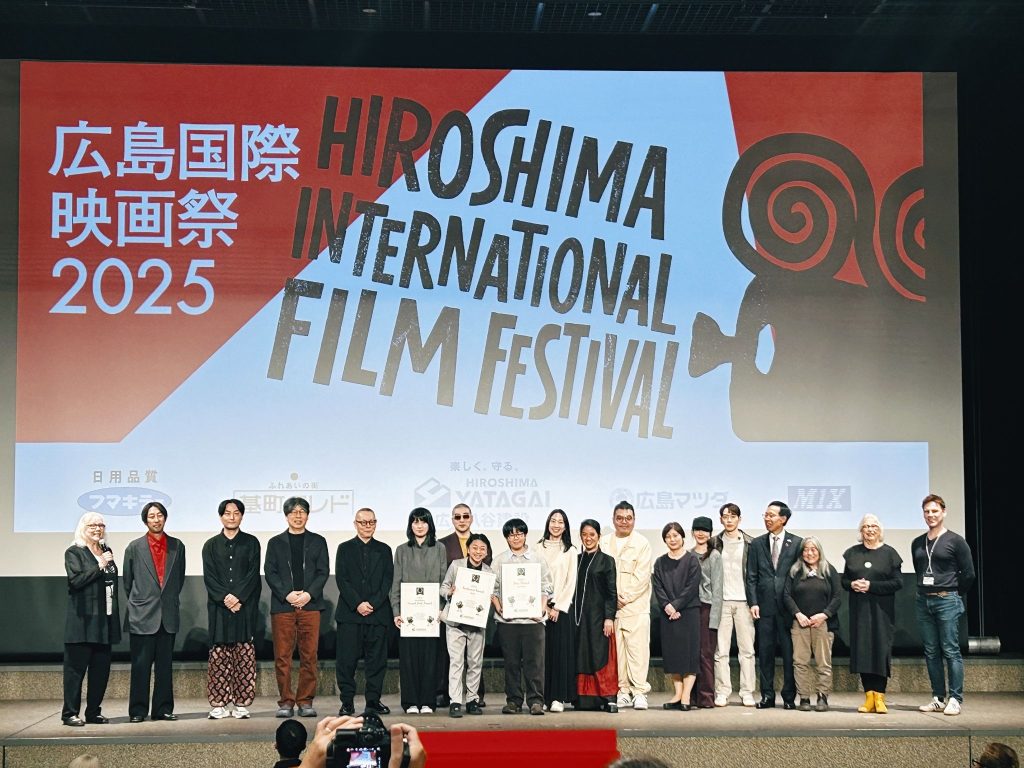
At 6:15 p.m. on Sunday, November 30, the lights dimmed inside the NTT CRED Hall venue 1, and the festival’s final program quietly shifted into the ceremony. The closing event of the Hiroshima International Film Festival—complete with the announcement of the International Short Film Competition winners and the formal awards ceremony – unfolded with a sense of earned anticipation. The evening was guided by radio personality Michita Kimura and interpreter Pauline Baldwin, whose poised delivery kept the room attentive and at ease.
The ceremony opened with closing remarks from Hiroshima Governor Mika Yokota (read on her behalf by Yukari Yamanaka, Director of Cultural Arts at the Hiroshima Prefectural Environmental and Civic Affairs Bureau), followed by a message from Kang Ho-joong, Consul General of the Republic of Korea in Hiroshima. Then, as if the room collectively inhaled, the awards for the six shortlisted films—selected from submissions around the globe—were revealed.
Jury Chair Hiroyasu Doi began with a brief reflection: “The selection was thrilling—diverse, sophisticated, and full of cinematic vitality. And because this is Hiroshima, we chose works befitting that place and meaning.”
The Audience Award was the first to be declared. Director Yukihiro Morigaki presented the honor to Japan’s own “The Paper Crane and the Blue Frog”, directed by Chavo. With the filmmaker absent, actor Shona Sakamoto accepted onstage, smiling with the unguarded surprise of someone handed an unexpected gift: “I honestly didn’t think we’d receive this,” he said, glowing.
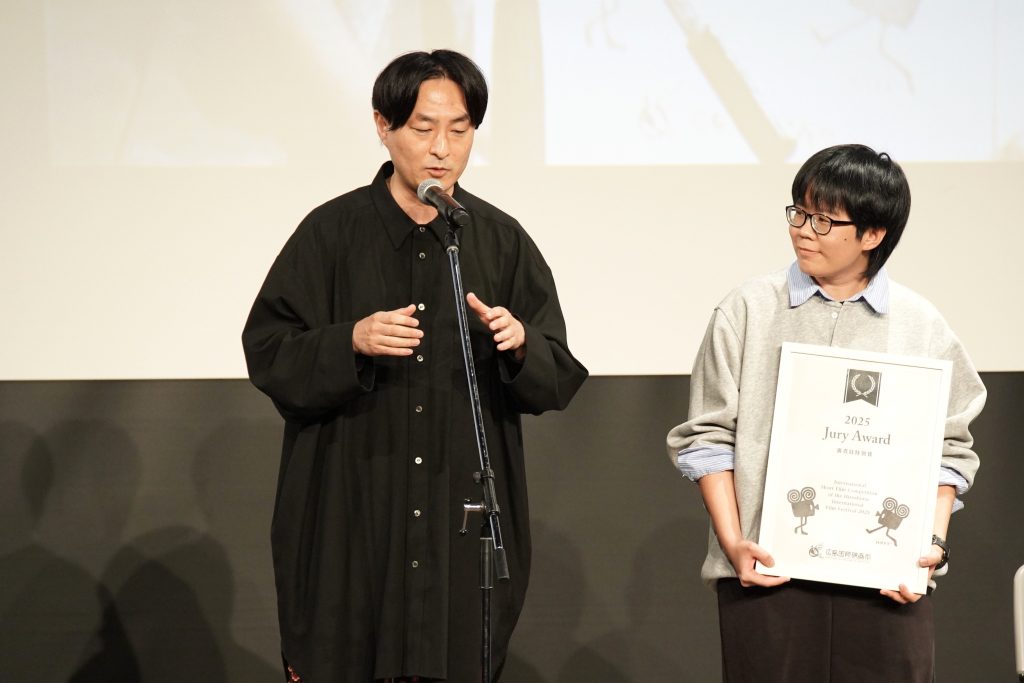
Next came the Special Jury Prize. Director Cho Sung-kyu presented the award to Malaysian filmmaker Mickey LAI for “WAShhh”, praising both vision and craft: “The framing, the subject, the control—it is extraordinary talent.” LAI responded gently, almost matter-of-factly: “Hiroshima speaks of love and peace. That is why I made this film.”
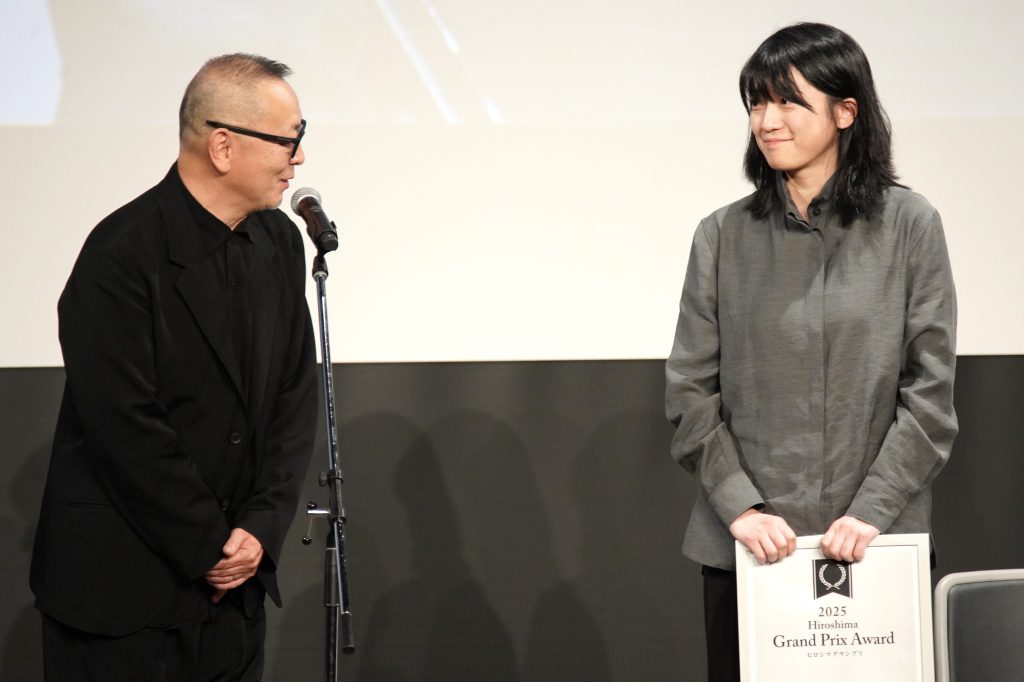
Then came the moment audiences had been waiting for: the Hiroshima Grand Prix. When Director Doi announced Han Won-young’s ”The Lion Doesn’t Cry,” the applause shifted—less polite, more emotional—rolling through the hall like recognition.
Director Doi elaborated with quiet admiration: “The images—every shot—is beautiful. But beyond that beauty, there is a message. There is hope.”
Han, stepping forward, fought back tears as she spoke:
“Whenever I make a film, I ask myself why it must be so difficult. With this one, I believed I could make it because the people of Hiroshima taught me how pain can soften.”
Finally, all involved went up on stage for a group photo, bringing the festival to a close.