

At the Hiroshima International Film Festival 2025, a talk session was held following the screening of the feature-length war drama, “The God’s Island” (working title). The session featured Director Hiroki Taniguchi in conversation with Ms. Atsuko Morimune from the Hiroshima City Cinematographic and Audio-Visual Library.
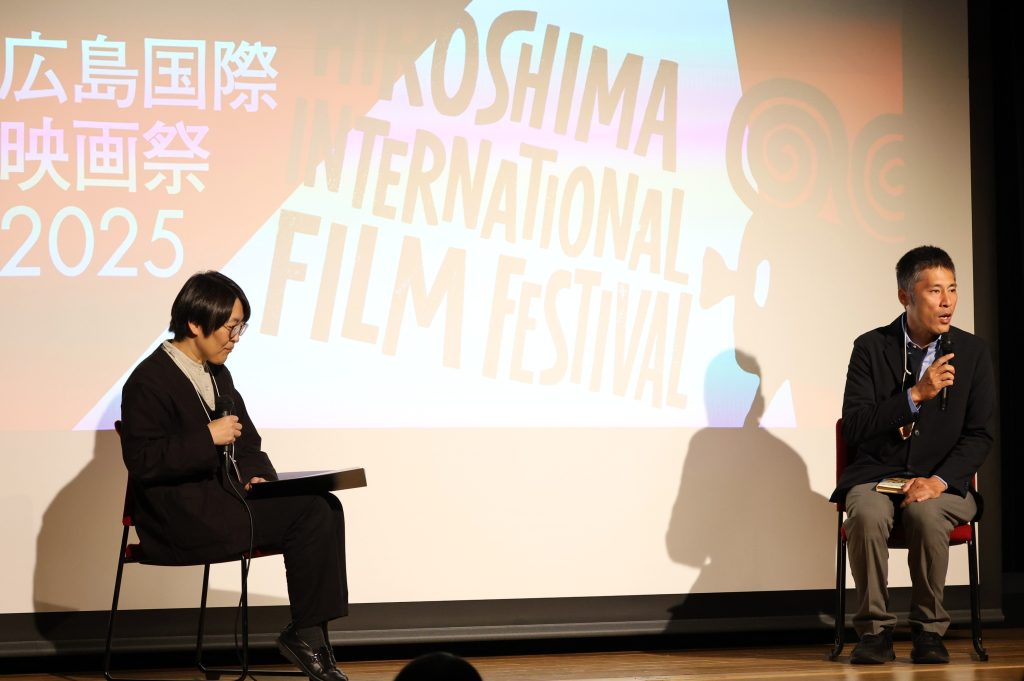
Reflecting on presenting the film in Hiroshima in the 80th year since the end of the war, the director remarked, “I am grateful that we could share this space together. If this film can offer even a small measure of healing for those lost, it would mean a great deal to me.” The film draws upon the wartime experiences of the director’s grandfather, who saw the end of the war on Mindanao in the Philippines, as well as the director’s own participation in a remains-recovery mission some 23 years ago. It is also informed by the so-called “forgotten wars,” including the New Guinea campaign and the Port Moresby operation.
Because Japanese military records were destroyed, the director retraced these histories using U.S. military documents and survivor testimonies. The film depicts Hiroshima’s Ujina Port as a symbolic place representing both the “departure point” and “final destination” of Japan’s war, shedding light not only on the atomic bombing but also on the broader wartime history that preceded it.
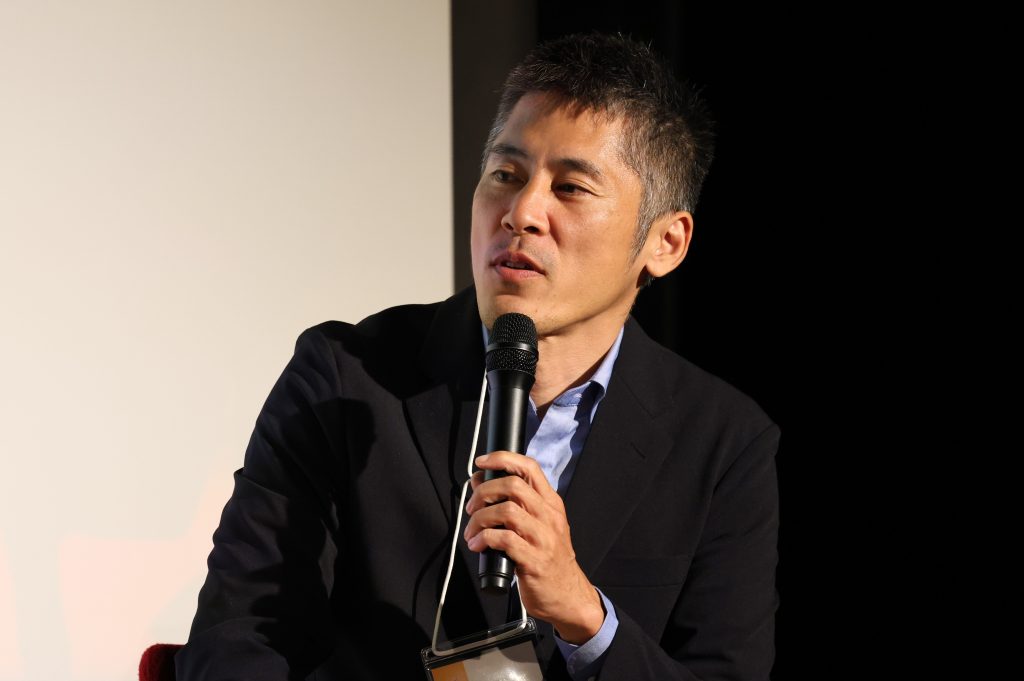
Many of the cast, including lead actor Mr. Hideaki Tani, participated on a volunteer basis. Director Taniguchi, who also served as part of the art department, described the harsh conditions of filming in the jungles of New Guinea: covered in thorns, he relied on coconut milk taught by local residents as an emergency remedy. He also revealed that casting Ms. Yasuko Beppu, an actress with the Mingei Theatre Company, was an expression of respect for her predecessors who have long carried forward the stories of atomic bomb survivors on stage.
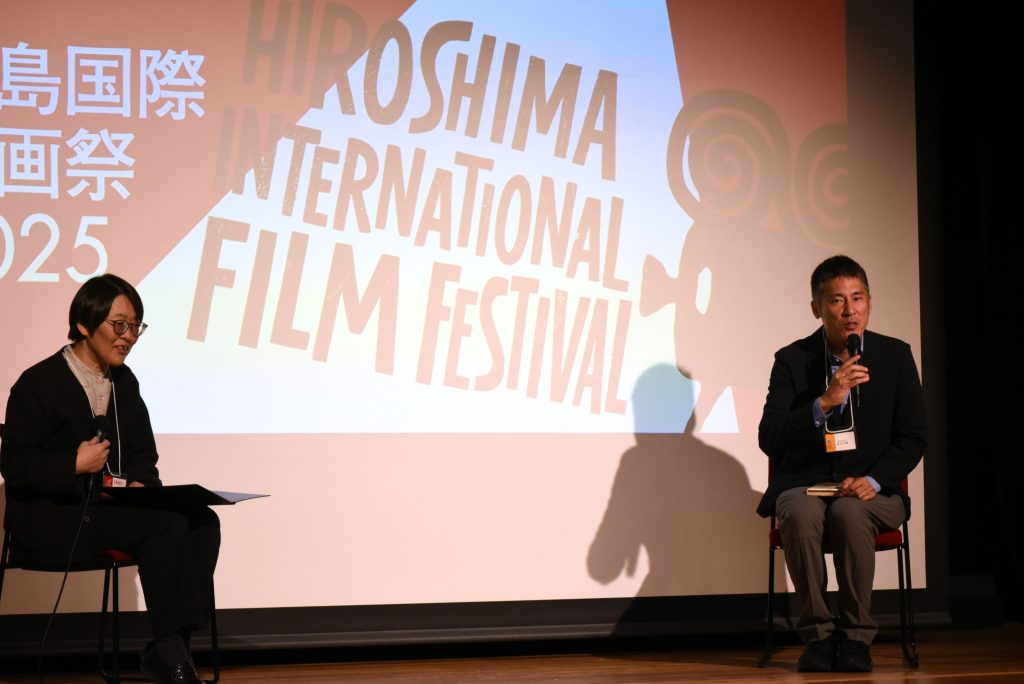
During the Q & A session, audience members voiced thoughts such as, “I hope junior and senior high school students will see this film” and “How do you view the reality that some children don’t even know Japan lost the war?” The director stressed the importance of reopening these stories: “As the generations who experienced the war pass away, we must keep these narratives open and relearn our history.” He shared that he is currently traveling across Japan to visit memorial sites, preparing for a nationwide release next year—“the 80 years plus one” year since the war’s end—and encouraged local communities to reach out if they wish to host a screening.
The event concluded with an invitation to the audience to share their impressions and spread the word on social media.