
On the morning of November 30, “Book of Shadows” was screened at NTT CRED Hall, Venue 2.
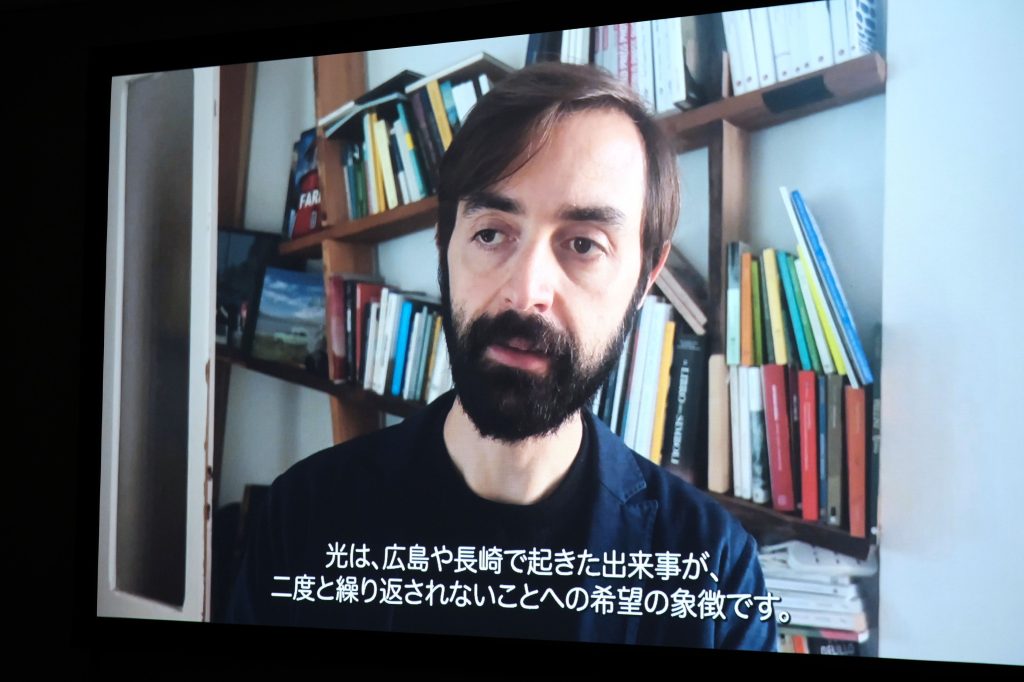
Though the hour was early, the auditorium filled steadily, and the film began amid a hush marked by collective attentiveness rather than ceremony. When the screening ended, a recorded message from the director, Carrieri—unable to attend in person—was shown, extending the film’s contemplative reach beyond the screen and into the room.
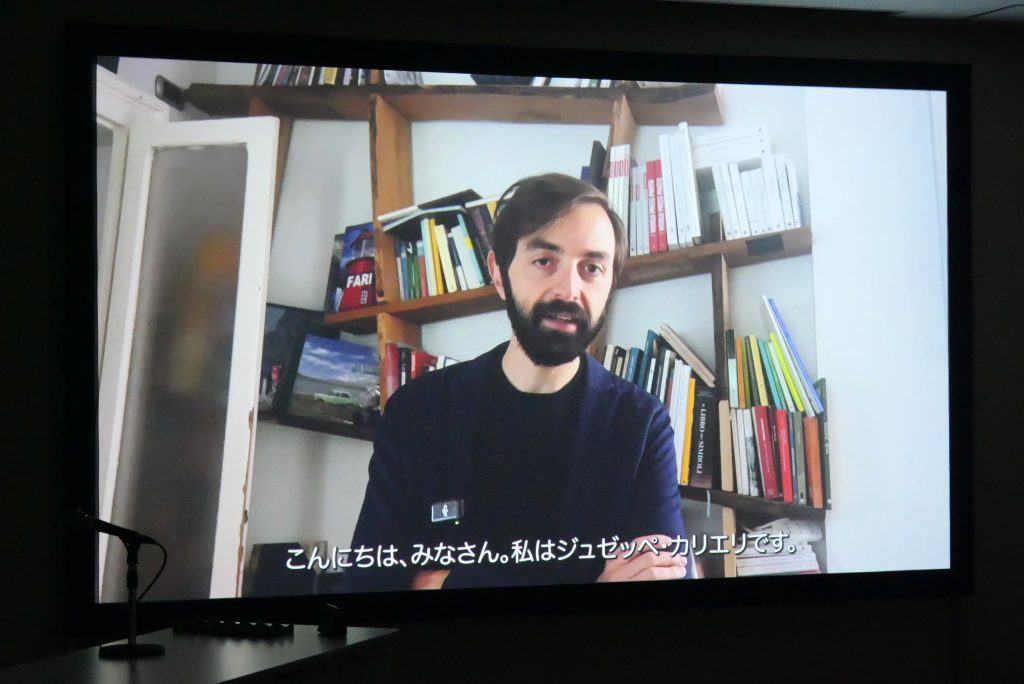

Carrieri, a professor at a university in Milan, has described the film as a collaborative endeavor, shaped with the help of students, atomic bomb survivors, and institutions such as the Hiroshima Peace Memorial Museum. Drawing on decades of scholarship and testimony related to Hiroshima, the work positions itself less as a documentary than as an act of shared remembrance.
“Book of Shadows” is structured around a simple yet resonant contrast: light that vanishes in an instant and shadows that linger, sometimes indefinitely. In the film, shadows become vessels of memory—silent witnesses that outlast the moment of their creation. A poetic narration, interwoven with the reflections of survivors, gives the film its restrained emotional force. As Carrieri has remarked, this is “not merely a film, but a story born from experience.”
The opening sequence features fireworks, their brief brilliance dissolving almost as soon as it appears. What remains is the shadow—suggesting permanence, even as human lives prove fragile, provisional, and often forgotten. Yet the film resists despair. Through the act of imagining the past—by tracing shadows back to their origins—it proposes memory as a bridge to the future, a means of transforming loss into movement.
The film also turns its gaze outward, toward the cosmos. From space, the Earth appears without borders, its divisions rendered irrelevant. From Earth, the universe seems to belong to no one and to everyone at once. In this reciprocal view, Carrieri suggests, lies the possibility of peace: an understanding of humanity that transcends nationality, race, and history without erasing them.
The audience that morning spanned generations, and as the lights came up, it was clear that the film had invited a collective inward turn. Carrieri has said that the most important response he hopes for is not immediate agreement or admiration, but remembrance—being recalled, quietly and repeatedly, over time. Judging by the stillness in the hall, many viewers appeared already to be doing just that.