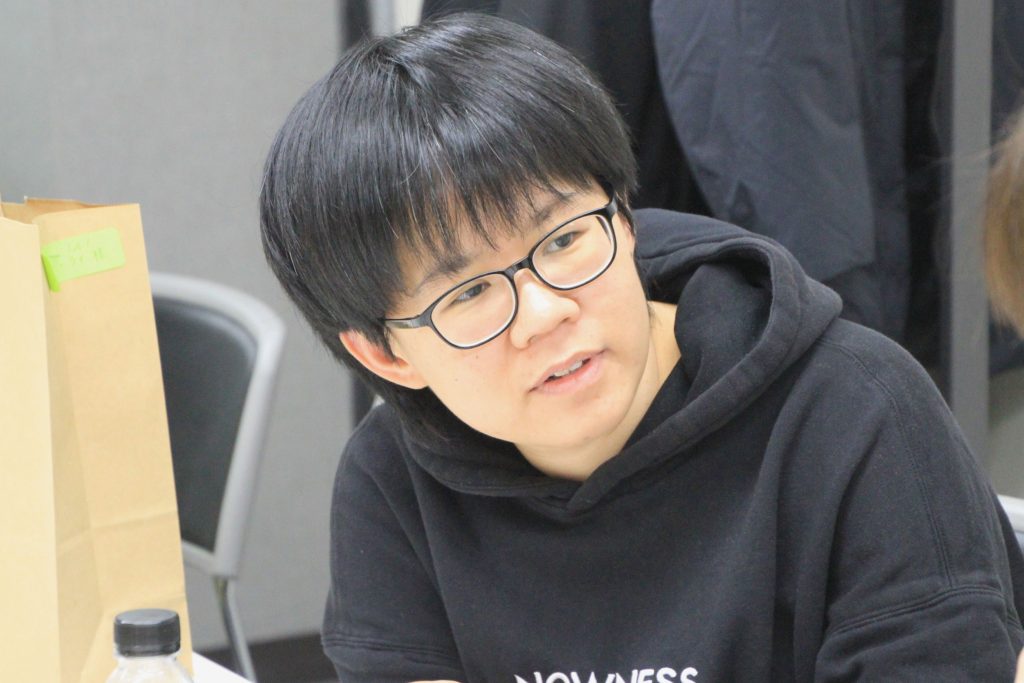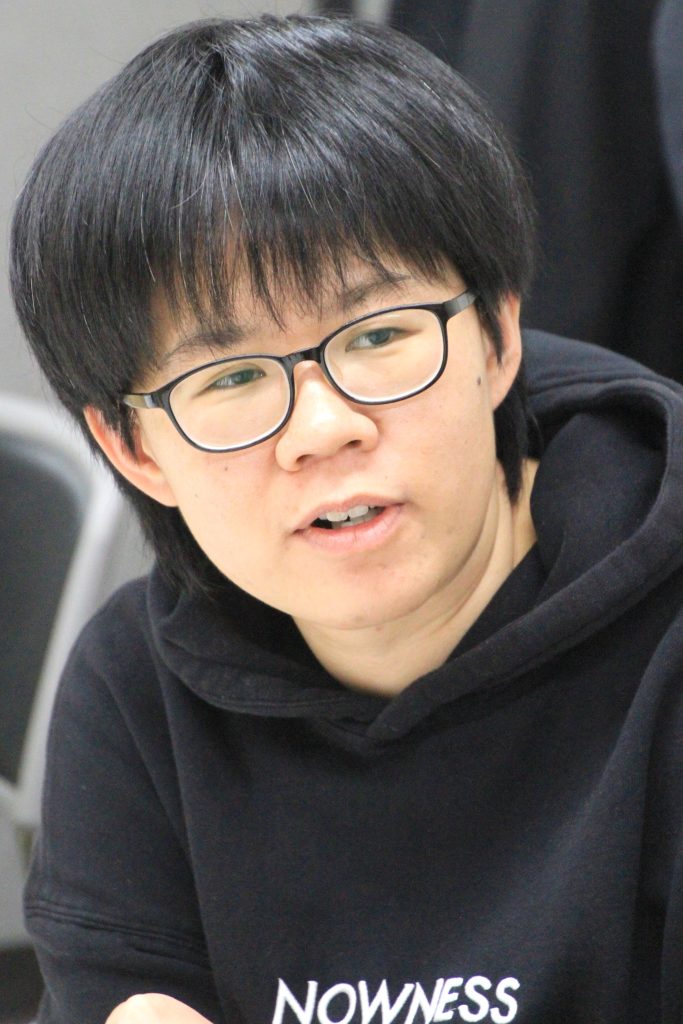

We spoke with Director Mickey Lai, the director of “WAShhh”, a nominated film in the International Short Film Competition. She visited Hiroshima for the first time on this occasion to attend the Hiroshima International Film Festival (HIFF) 2025.
Q: “WAShhh” was shot in striking black and white rather than in color. What was the intention behind this choice?
A: There are two reasons. The first was to weaken the visual impact of the film. In this film, blood frequently appears on screen. And if it were in color, the audience might focus on the blood rather than on the relationships between the characters. However, this is a story about friendship and conflict. I aimed to keep the focus on the girls’ arguments and on their personalities by choosing black and white.
The second reason was to avoid drawing attention to skin color. Malaysia is a multicultural country, consisting of many different communities. Primarily of Malay, Chinese, and Indian. We all have different skin colors. By using black and white, I would like to present everyone as equal, as if they were the same.
Q: What inspired you to make this film?
A: A few years ago, the political situation in Malaysia was unstable. The decisions and statements made by the ministers seemed absurd to me, which made me angry. I had felt a similar kind of anger about a related situation ten years earlier as well, and carried a lot of anger within myself. By making this film, I tried to understand my own country.
Q: Malaysia is often described as a country with a large Muslim population. Does religion influence people’s lives?
A: Islam has an influence on many of the fundamental ideas and rules that shape people’s daily lives in Malaysia.
In the film, the teacher is a Malay woman with a background in the military, and her intimidating behavior is the only thing she had gained from her career. The scene where she brought holy water and handed it to the students also reflects her experiences in the army.
Q: Do you have a message for the Hiroshima International Film Festival?
A: Thank you for your kindness. I believe the world needs more compassion and acceptance. I am grateful to this film festival for embodying those values.