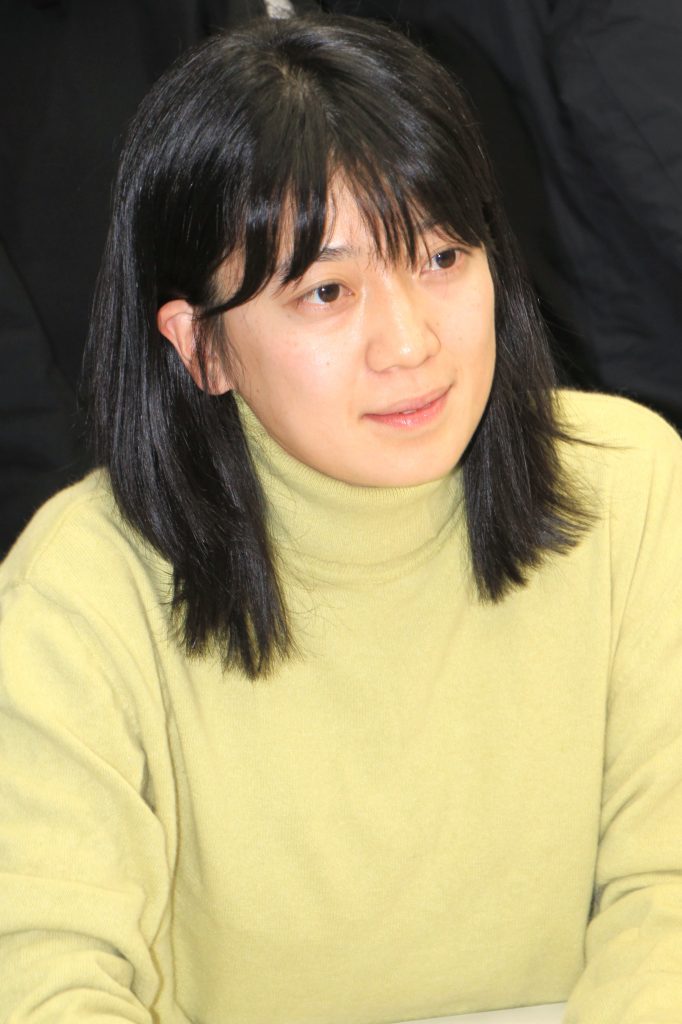

On Saturday, November 29 at 7:10 p.m., “The Lion doesn’t cry” was screened as part of the International Short Film Competition at NTT CRED Hall No.2. After the post-screening talk session, we conducted an interview with Director HAN Wonyoung. We asked her to elaborate on key scenes in the film, her thoughts on the real-life wildfire survivors in Gangneung who inspired the story, and the significance of presenting her work at the Hiroshima International Film Festival.
- Why depict such an important moment through a “dream” scene?
She explained:
“In my own family, we don’t directly express feelings like worry, care, or love. Because we never verbalize these emotions, I didn’t know how to portray them straightforwardly. But then I thought—maybe these unspoken feelings could exist in a ‘dream.’ That’s why I chose to have the family communicate their emotions in a dream sequence.”
- Why include an older sister if the story were expanded into a feature film?
She elaborated that “Elementary schoolers, junior high students, and adults all live in different environments. What influences them and what they must overcome differs as well. I want to portray these contrasts, which is why I would include the sister in a feature version.”
- Why depict the pain of Gangneung’s wildfire survivors in a feature-length version, something not shown in the short film?
She answered, “We actually filmed scenes of the wildfire. But at the time of production, not much time had passed since the disaster, so we decided to cut those scenes out of respect for the survivors’ trauma. The film was made for a friend who was a victim of the fires, and that friend loved it very much. Considering that, I now want to depict the pain of the survivors so people in other regions can also share in that experience. That is why I would include those scenes in a feature film.”
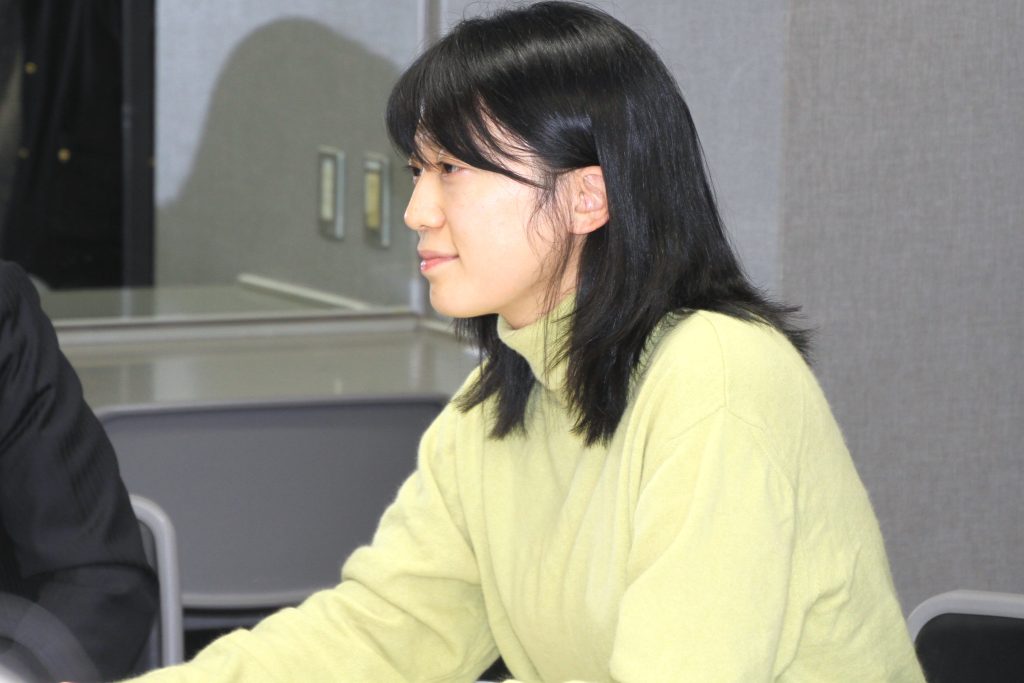
Director Han gave a message to the Hiroshima International Film Festival that she quoted a Korean saying—“Joy doubles when shared; pain halves when shared”—and added, “By screening this film at the Hiroshima International Film Festival and sharing the pain of the disaster with the people of Hiroshima, I feel that we may have eased the burden carried by the survivors in Gangneung. That makes me truly happy.”